INDUSTRIES
One Factory OS, configured for the reality of your industry.
Merikh provides a shared industrial intelligence foundation while adapting asset structures, production context, KPI definitions, operating rules, and workflows to the way each manufacturing environment actually runs.
Built for the way different industries actually operate.
| Industry | Card headline | Card copy |
|---|---|---|
| Textile, Apparel & Fibers | Coordinate every machine, shift, and loss across textile production. | Connect mixed-generation equipment and production context across spinning, weaving, knitting, dyeing, finishing, carpet, or garment operations. |
| Food & Beverage | See production, quality, and losses across every shift. | Bring processing, filling, packaging, utilities, changeovers, and operator context into one operational picture. |
| Dairy, Ice Cream & Cold Chain | Protect throughput, quality, and time-sensitive operations. | Connect production events, equipment conditions, stops, cleaning cycles, temperature-sensitive context, and quality signals. |
| Automotive & Mobility | Coordinate cycle time, quality, and response across complex lines. | Connect assembly events, line conditions, Andon context, quality outcomes, maintenance response, and plan-versus-actual performance. |
| Metals, Steel & Fabrication | Make capacity, quality, and process losses visible. | Link asset utilization, batches, process conditions, energy context, scrap, rework, and maintenance across heavy and mixed operations. |
| Machinery, CNC & Industrial Equipment | Turn mixed-machine production into one operational picture. | Connect machine state, setup, cycle variance, tooling, queues, quality, and schedule context across high-mix production. |
| Pharmaceuticals, Biotech & Medical Devices | Connect execution, equipment, and quality context with stronger traceability. | Bring production events, equipment conditions, approved workflows, quality signals, and controlled operational evidence into one shared context. |

Configuration that reflects your factory—not a generic industry label.
| Configured area | What it means |
|---|---|
| Asset hierarchy | Model sites, lines, cells, machines, components, utilities, and supporting systems in the structure teams recognize. |
| Production context | Connect products, orders, batches, shifts, recipes, changeovers, and process stages where relevant. |
| KPI definitions | Use agreed formulas, planned-time rules, quality definitions, and source mappings for the operation. |
| Loss classification | Adapt reason codes and loss categories without breaking cross-factory comparability. |
| Roles and workflows | Reflect who observes, decides, approves, executes, and verifies in the real operating model. |
| AI scope | Limit assistance and action to the evidence, assets, and authority appropriate to each role. |
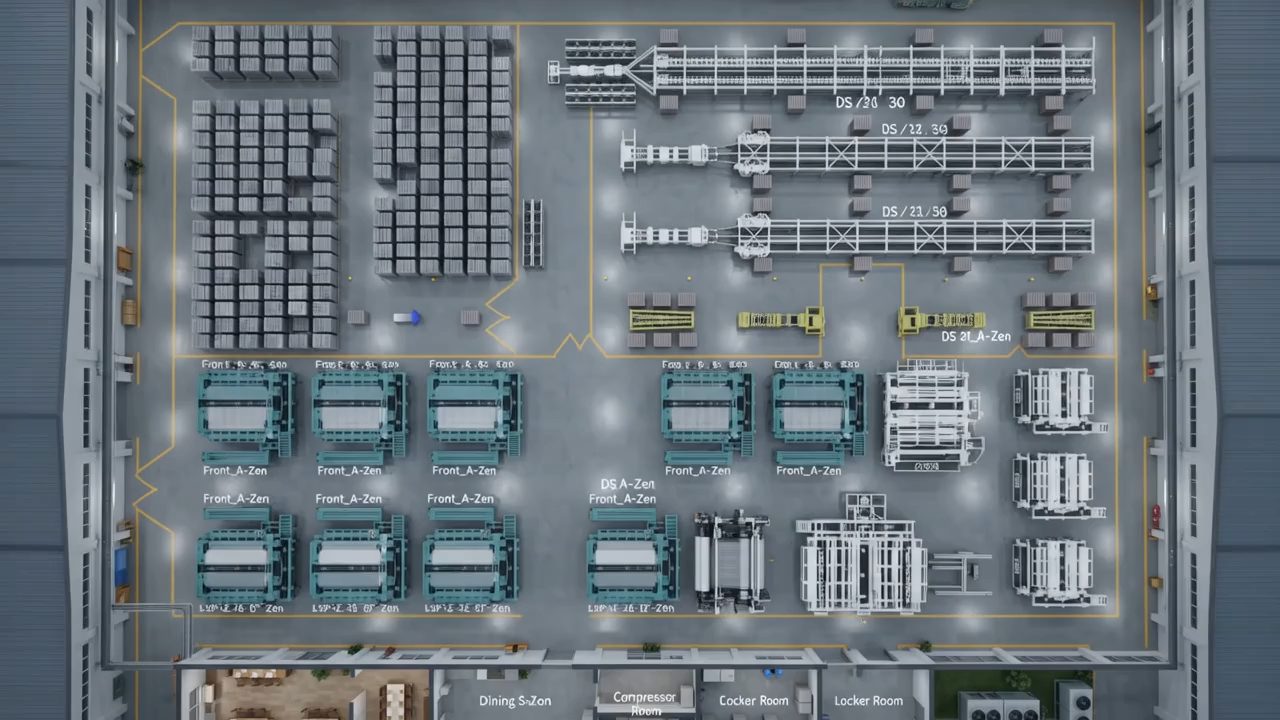
Featured vertical: textile manufacturing.
Merikh’s first design-partner work focuses on a textile production environment with mixed-generation machines and multiple data paths. The initial objective is to establish reliable machine visibility and a trusted operational baseline, then connect downtime and performance signals to the actions that can improve them.
Start with one line, process, or measurable loss.
You do not need to model the entire factory before learning. We help identify a practical starting scope that can be connected, validated, and measured—while keeping the data model ready for expansion.