
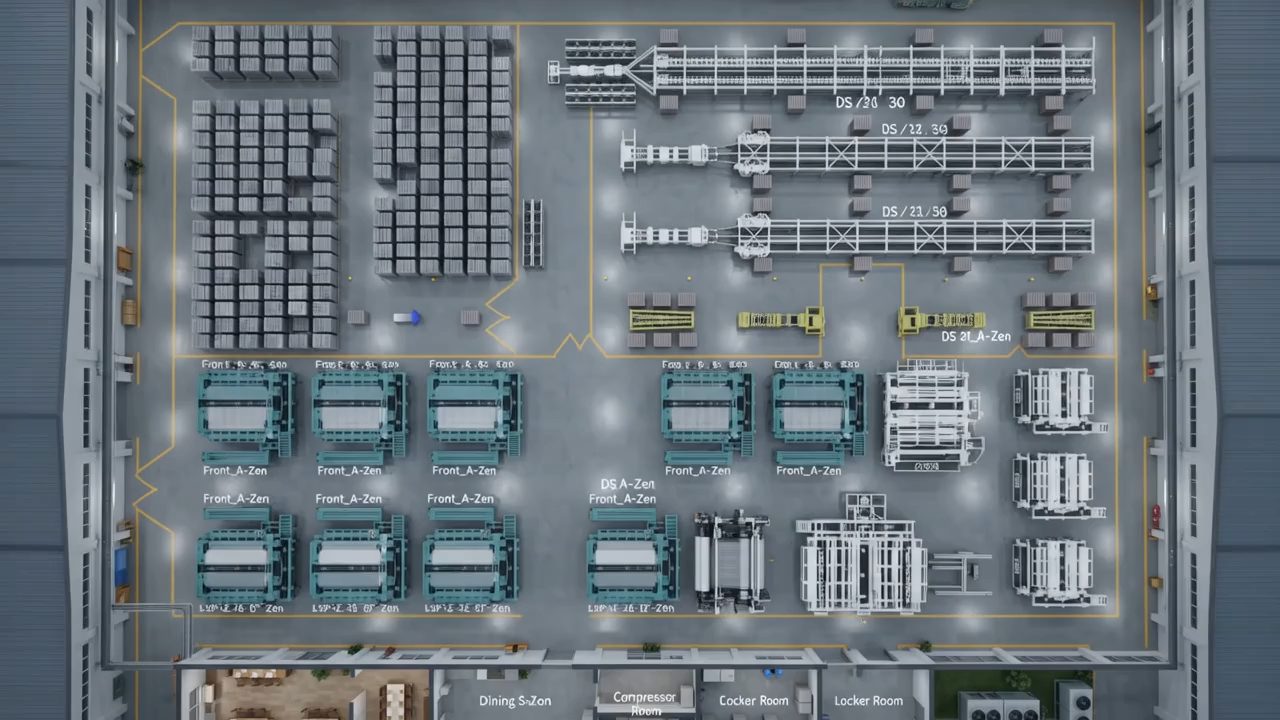
Isolated machine signals
- To
- Machine data connected to products, shifts, orders, and operating conditions
THE MERIKH PLATFORM
Merikh connects machines, systems, and operational teams in one shared factory model. It turns raw signals into trusted context, role-specific decisions, and actions whose impact can be measured.
| Step | Website copy |
|---|---|
| Connect | Bring machine signals, industrial systems, cameras, sensors, and operator input into a reliable data foundation. |
| Understand | Add the production context that explains what the data means: asset, product, order, shift, process, and operating condition. |
| Prioritize | Identify the losses and abnormalities that matter most to safety, quality, capacity, cost, and delivery. |
| Coordinate | Send the right evidence, recommendation, and workflow to the people responsible for deciding and acting. |
| Measure | Compare the result with the baseline and make the impact visible. |
| Learn | Keep the evidence, action history, and outcome connected so the next decision starts with better context. |
| Role | What the experience should help them do |
|---|---|
| Factory leadership | See where performance, capacity, quality, and reliability need attention—and whether improvement work is delivering results. |
| Production managers | Understand plan versus actual, line constraints, recurring losses, and the actions affecting today’s output. |
| Maintenance teams | Prioritize work with asset history, event evidence, production impact, and clear ownership. |
| Quality teams | Connect defects and waste to products, batches, equipment conditions, process events, and corrective actions. |
| Operators | Report context, receive relevant instructions, and contribute the human evidence that machine data alone cannot provide. |
| IT/OT and engineering | Manage connectivity, data quality, asset structure, integrations, access, and the technical health of the platform. |
Merikh is being built around a simple principle: understanding comes before automation. AI should reason with factory context, show the evidence behind its recommendation, operate within a defined role and asset scope, and request human approval whenever the action requires it.
Industrial KPIs remain deterministic. AI helps people investigate, explain, prioritize, and coordinate; it does not replace trusted calculation logic or silently take control of physical equipment.
Merikh does not require a factory to solve everything at once. A deployment can begin with a limited line, machine group, or operational loss—while the underlying model is designed to support broader factory coordination over time.
| Deployment step | Copy |
|---|---|
| Assess | Understand the production environment, available data, existing systems, and the decision that needs to improve. |
| Connect | Select the appropriate integration path for the approved pilot scope. |
| Validate | Check signal meaning, freshness, completeness, and production context before trusting the output. |
| Baseline | Establish a transparent starting point for the agreed KPIs and losses. |
| Act | Put insights into a role-based workflow with clear ownership. |
| Verify | Measure what changed, what did not, and what should happen next. |
Merikh is designed to work across mixed industrial environments. Depending on the factory and approved scope, integration may involve PLCs, drives, sensors, cameras, edge gateways, operator input, and supported ERP, MES, SCADA, or maintenance-system interfaces. Compatibility is confirmed during technical assessment—not assumed from a generic claim.
Reliable factory intelligence depends on controlled access, traceable data, visible calculation logic, and accountable action. Review how Merikh approaches data quality, role-based access, auditability, and AI governance.